
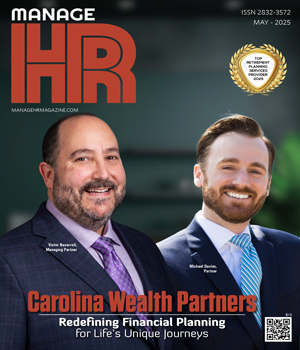
Carolina Wealth Partners: Redefining Financial Planning for Life’s Unique Victor Navarroli, Journeys

Labor Law Poster Compliance Company of the Year - 2025

Technological advancements are introducing disruptive changes to the HR management space, altering the competitive landscape and redefining how solutions and services are created, distributed and consumed. Societal shifts, evolving lifestyles and cultural changes are compelling businesses to innovate and enhance their customer value proposition.

Regulatory factors, including industry regulations and government policies, significantly impact market entry, pricing strategies and product offerings. Companies must find smart and effective methods to encourage long-term employee loyalty.

Labor law posters have become mandatory, requiring employers to display notices about various federal and state labor laws in their workplaces. They act as a reminder of the legal framework that governs the employer-employee relationship, helping develop transparency and compliance in the workplace. Businesses must collaborate with service providers who can regularly update labor law posters and demonstrate compliance efforts in case of an audit or inspection.

With the rise of remote and hybrid work models, there is also a growing trend toward digital labor law poster solutions. These include QR codes linking to online resources, mobile applications and interactive digital displays in the workplace. Personalized delivery of labor law information helps tailor content to individual employees based on their role, location and specific circumstances.

Another key aspect gaining momentum is the retirement income strategies, which concentrate on building comprehensive plans for retirees to have a stable income throughout their retirement years. The aging population and increasing awareness about financial securities are prompting massive growth in the retirement planning service market. Life expectancy continues to rise, and people are living longer postretirement, especially in developing countries. This means they require more substantial savings to maintain their standard of living.

In this edition of Manage HR, we explore the recent developments and leading trends in labor law, poster compliance and retirement planning services and how companies leverage cutting-edge solutions to stay abreast of challenges and potential potholes for establishing a strong presence among the public.

We hope this edition of Manage HR helps you find the right partner for your business requirements.


    Labor Law Poster Compliance Company of the Year

    PosterElite is the leading provider of automated labor law poster compliance solutions for providers in the HR, Payroll, PEO, Benefits, and adjacent industries. Specializing in physical and digital posters, PosterElite helps its partners deliver automated compliance to their clients, resulting in improved client retention, new sources of revenue, and a strengthened competitive position. ... read full profile

Employment Law Firm Info

Q1
What Do Employment Law Firms Do for Organizations?
Employment law firms help organizations navigate workplace decisions that carry legal and operational consequences. Their work often covers hiring practices, workplace policies, employee disputes, terminations, wage issues, executive agreements, harassment claims and internal investigations. In many cases, legal guidance is brought in long before a dispute escalates publicly. The Top Employment Law Firms are not only focused on litigation response. Many organizations rely on them to strengthen internal policies, improve documentation standards and reduce the likelihood of future conflicts developing in the first place. For HR leaders, the value usually comes down to clarity. Workplace decisions rarely affect only legal exposure. They also influence employee trust, management accountability and organizational stability.
Q2
Why Do Top Employment Law Firms Matter Now?
Top Employment Law Firms matter more today because workplace expectations and labor regulations are shifting faster than many organizations can comfortably adapt to. Hybrid work, pay transparency requirements, worker classification disputes and growing scrutiny around discrimination claims have pushed employment law into broader business discussions. Issues that once stayed within HR departments are now drawing leadership and board-level attention. Employee awareness has changed too. Workers are more informed about workplace rights and more willing to challenge inconsistent policies or unclear employment practices. At the same time, organizations operating across multiple states are dealing with increasingly fragmented regulatory requirements. That combination has increased demand for employment law firms capable of balancing legal interpretation with practical workplace guidance.
Q3
How Should Organizations Evaluate Employment Law Firms?
Organizations evaluating employment law firms should avoid relying too heavily on brand reputation alone. A well-known name does not automatically translate into the right operational fit. Industry familiarity matters. So does experience handling workforce issues similar to the company’s own environment. Some firms are stronger in litigation, while others are more effective in advisory support and preventive policy work. Responsiveness also becomes important quickly during sensitive employment matters. Delayed guidance can complicate internal investigations, employee relations issues or leadership decisions that require immediate action. Many HR teams place high value on firms that explain risk in practical language rather than relying entirely on legal terminology. The strongest advisors usually help decision-makers understand both the legal implications and the broader workplace impact tied to each option.
Q4
What Business Value Do Employment Law Providers Deliver?
Employment law providers help organizations reduce avoidable disputes and respond more consistently when workplace issues arise. The Top Employment Law Firms often create value through stronger documentation practices, clearer workplace policies and more structured investigation processes. Those improvements are not always highly visible day to day, but they tend to matter significantly once disputes or compliance questions emerge. For organizations managing distributed teams, consistent policy application becomes more difficult over time. Legal guidance can help create alignment across departments, management groups and regional operations where workplace expectations may differ. Many companies also rely on employment law providers to support leadership training and manager guidance before problems escalate into formal complaints or litigation exposure.
Q5
How Are Expertise and Technology Changing Employment Law Support?
Employment law support has become more prevention-focused in recent years. Many firms now use digital systems for case management, compliance tracking, policy review and document organization to improve speed and consistency across client matters. Technology helps streamline administrative work, though legal judgment still sits at the center of employment decisions. Workplace disputes rarely fit neatly into standardized workflows. The most effective employment law firms tend to combine technical legal expertise with a practical understanding of workplace culture, employee dynamics and regulatory change. That balance often determines whether legal advice becomes genuinely usable for HR teams and business leaders instead of remaining purely theoretical. For organizations comparing providers, practical application tends to matter more than legal complexity alone.
Q6
What Should Decision-Makers Prioritize When Comparing Firms?
Decision-makers comparing the Top Employment Law Firms should focus on specialization, communication clarity and long-term advisory value rather than cost alone. A firm should understand how the organization operates internally, including workforce structure, leadership dynamics and industry-specific pressures. Employment issues rarely exist in isolation. They usually intersect with culture, management practices and business continuity concerns at the same time. The least expensive option may not provide the strategic depth required for sensitive or high-risk matters. In many cases, organizations benefit more from firms that can help prevent legal exposure through stronger manager guidance, policy development and training support before disputes emerge. The strongest employment law providers are typically the ones that remain useful outside of crisis situations.
Take Me Top